Guava puree for cocktails brings real fruit body and tropical flavor to beverages with a distinctive identity. Moreover, it helps teams maintain consistent recipes throughout service, production shifts, and changing preparation volumes. Meanwhile, tropical cocktails keep gaining ground because they combine freshness, color, and recognizable fruit-forward profiles. However, bars, hotels, and beverage companies need stable ingredients rather than improvised, inconsistent solutions throughout operations.
Therefore, guava works exceptionally well in mixology because its aroma, gentle acidity, and texture create noticeable presence. Additionally, these qualities support flavorful beverages without forcing teams to depend heavily on artificial flavorings. If your team develops menus or ready-to-drink beverages, review our guava fruit before choosing your formulation. This option supports formulation, traceability, and dependable B2B purchasing decisions across demanding commercial beverage operations.
For beverage companies, the challenge involves more than creating a memorable recipe for customers and distributors. It also requires preserving the same sensory profile when shifts, teams, or production volumes change.
Furthermore, this ingredient helps technical decisions become repeatable recipes with fewer last-minute adjustments throughout production. As a result, internal teams gain clearer processes, better coordination, and more predictable preparation outcomes.
At that point, a documented ingredient simplifies purchasing, quality control, and product development across departments. Moreover, commercial teams can promise a steadier experience without depending on naturally variable fresh fruit.
What is guava puree for cocktails?
Guava puree for cocktails is a processed fruit ingredient that teams incorporate into alcoholic or nonalcoholic beverages. Its value comes from adding flavor, color, texture, and a sensory experience closer to real fruit.
In bars, professional kitchens, or beverage plants, puree helps teams standardize preparations across different shifts. Additionally, it reduces variation when several employees prepare the same recipe under changing service conditions.
Therefore, at Dream Foods Caribe, our puree remains natural, undiluted, unconcentrated, unfermented, and preservative-free throughout processing.
Difference between puree, pulp, juice, and guava concentrate
Producers create puree by breaking down and straining the fruit’s edible portion through controlled processing. Therefore, puree usually delivers greater body and texture than standard juice in finished beverage applications.

Pulp may feel more rustic and fibrous, while juice generally provides a thinner overall consistency. Conversely, concentration removes water through evaporation and may considerably alter the ingredient’s overall sensory intensity.
For textured beverages, guava fruit offers a more expressive and substantial base for formulation purposes. Additionally, it supports recipes where tropical flavor should appear clearly from the very first sip.
Why do bartenders prefer guava fruit instead of juice?
Guava puree for cocktails may outperform juice when recipes require body, aroma, color, and stronger fruit presence. Moreover, it lets bartenders adjust sweetness and acidity without diminishing the ingredient’s recognizable guava character.
These advantages explain its growing use across bars, hotels, restaurants, and commercial beverage development programs:
- Greater flavor intensity. Puree maintains a fruit-forward sensation and supports the tropical profile more effectively across repeated service periods.
- Better texture and fuller body. Its density gives each cocktail a more complete, satisfying mouthfeel throughout demanding bar service periods.
- Consistency in every preparation. One standardized serving helps teams repeat recipes with fewer variations between services during busy shifts.
- Less need for artificial flavorings. Real fruit helps teams build cleaner, more recognizable beverage profiles across varied commercial drink concepts.
Which spirits pair best with Guava fruit?
Guava puree for cocktails pairs well with clear and smoky spirits because it contributes fruit, acidity, and color. Even so, each spirit requires a different balance to preserve structure and flavor throughout the finished drink.
Before finalizing a menu, carefully test each base with ice, citrus, sweeteners, and service conditions. Then, adjust every proportion according to the beverage concept, target audience, and desired sensory profile.
- Rum and guava. This tropical pairing works especially well in daiquiris, punches, tiki-style beverages, and popular seasonal menus.
- Tequila and guava. Together, they create a useful base for margaritas featuring lime, salt, or spicy flavor profiles.
- Vodka and guava. This pairing supports light, clean cocktails that teams can easily adapt with soda during service.
- Mezcal and guava. The smoky profile contrasts with the fruit and creates deeper, more layered beverages for premium menus.
How to use guava fruit in cocktails step by step
Guava puree for cocktails requires methodical integration rather than simply pouring it directly into the serving glass. Consequently, teams can consistently prevent separation, excessive sweetness, or an overly heavy texture during preparation.
A basic process can follow these practical steps for more consistent beverage development and service results:
- Define the alcoholic base. Choose rum, tequila, vodka, mezcal, or a carefully designed nonalcoholic alternative for the intended concept.
- Adjust acidity. Use lime, lemon, or another acidic ingredient to balance the fruit’s natural sweetness within each recipe.
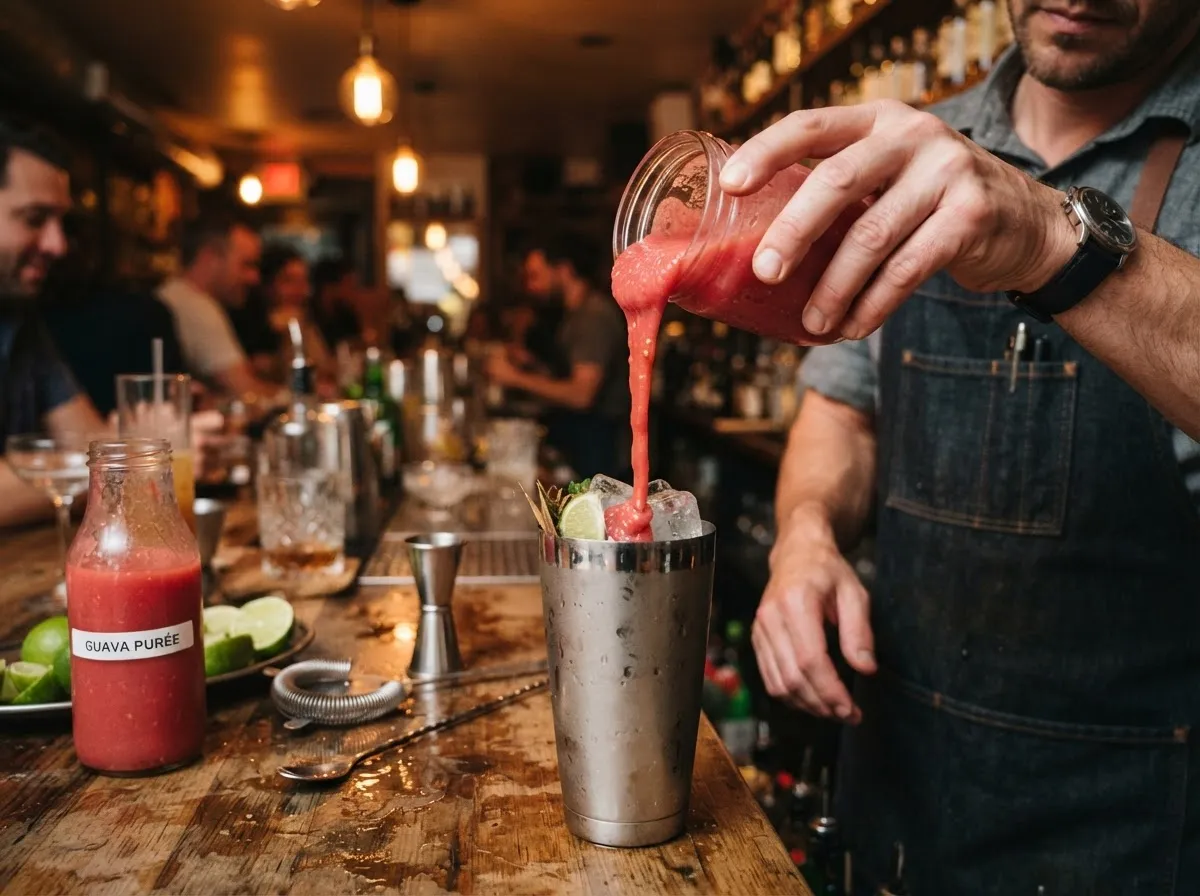
- Measure the puree. Begin with a moderate amount, then increase it according to the desired intensity during formulation testing.
- Shake with ice. Vigorous shaking helps integrate fruit, spirits, and remaining ingredients more evenly throughout the final beverage.
- Check the texture. When the cocktail feels thick, adjust it with water, soda, or base juice before serving.
5 popular cocktails with guava fruit
Guava puree for cocktails supports tropical recipes with strong visual appeal and a clear, memorable sensory profile. Moreover, it works effectively within alcoholic menus and carefully developed nonalcoholic beverage concepts for varied audiences.
These ideas provide practical starting points for internal testing, recipe refinement, and menu development programs:
- Guava margarita. Mix tequila, lime, triple sec, and guava for a bright, fruit-forward flavor profile for premium menus.
- Guava mojito. Combine rum, mint, lime, soda, and guava for a refreshing, aromatic beverage with broad appeal.
- Guava daiquiri. Use rum, lime, and guava to create a direct, balanced tropical variation for seasonal menus.
- Tiki cocktail. Combine rum, citrus, spices, and guava for a deeper, more complex sensory profile and aromatic depth.
- Tropical guava mocktail. Mix guava, lime, soda, and ice for a refreshing nonalcoholic option for inclusive beverage menus.
Frozen or aseptic guava fruit for mixology?
Guava puree for cocktails comes in frozen or aseptic formats for different commercial operating requirements. Ultimately, the best choice depends on volume, inventory turnover, available storage, and distribution logistics needs.
Frozen formats may suit operations with available freezer space and carefully controlled product consumption patterns. However, they require disciplined handling during thawing, preparation, and service to protect quality and consistency.
Aseptic formats support companies that need more practical storage and more predictable inventory planning processes. Additionally, sealed packaging protects the product more effectively before teams open it for production use.
Applications of guava fruit beyond cocktails
Guava puree for cocktails can also effectively support other beverage lines within diversified commercial portfolios. Therefore, it offers practical value for innovation, purchasing, quality, and product development teams across departments.
These applications expand its usefulness across commercial operations, seasonal menus, and new product development initiatives:
- Mocktails and nonalcoholic beverages. It creates tropical options with appealing body, color, and recognizable fruit character for varied audiences.
- Tropical smoothies. The puree provides a fruit base compatible with dairy, plant-based beverages, or ice during preparation.
- Premium lemonades. It creates a more sophisticated profile without making the final preparation unnecessarily heavy during service.
- Functional beverages and craft drinks. Real fruit ingredients help companies differentiate portfolios with more authentic positioning across competitive beverage markets.
How to choose quality guava fruit for beverages
Guava puree for cocktails requires evaluation across flavor, texture, documentation, and key operational performance criteria. Additionally, purchasing teams should examine much more than the listed price per kilogram during evaluations. A useful evaluation includes the following technical, logistical, and documentary criteria for supplier selection processes:
- Technical parameters. Review °Brix, pH, acidity, texture, microbiology, and declared shelf life before approval and sourcing decisions.
- Packaging format. Confirm that each presentation matches inventory turnover, storage capacity, and operational requirements properly and safely.
- Batch consistency. Test color, aroma, and body across several preparations before approving regular purchases and supplier contracts.
- Documentary compliance. Request technical sheets, certificates, and traceability records for internal audits and formal supplier approval processes.
Why choose simple guava fruit?
This simple option preserves the fruit’s natural soluble solids without artificial concentration or unnecessary dilution during processing. Moreover, it supports formulations that need recognizable flavor, dependable texture, and consistent fruit character throughout production.
At Dream Foods Caribe, we offer this product to beverage manufacturers, dairy processors, and industrial kitchens, with traceability and documentation.
Explore our guava fruit solutions at Dream Foods
Guava puree for cocktails performs best when suppliers understand the application, required format, and production scale. Therefore, we work as industrial partners rather than operating only as fruit sellers in commercial markets.
Our team can support purchasing, research and development, and quality departments with detailed technical information. Furthermore, we can guide testing for beverages, mocktails, smoothies, and tropical bases across different applications.
If you need a mixology solution, review our simple guava fruit before selecting a supplier. This puree can improve consistency, flavor, and performance behind the bar or throughout commercial production. Request technical specifications, samples, or commercial information about our available solutions for your next development project.
Before approving any batch, test the beverage using ice, citrus, and the menu’s actual sweetener. Consequently, you can assess separation, color, sweetness, viscosity, and sensory balance under realistic service conditions.
References
- Electronic Code of Federal Regulations. (2026). 21 CFR Part 120—Hazard Analysis and Critical Control Point (HACCP) Systems.
- U.S. Food and Drug Administration. (2024). Guidance for industry: Questions and answers on juice HACCP regulation.