
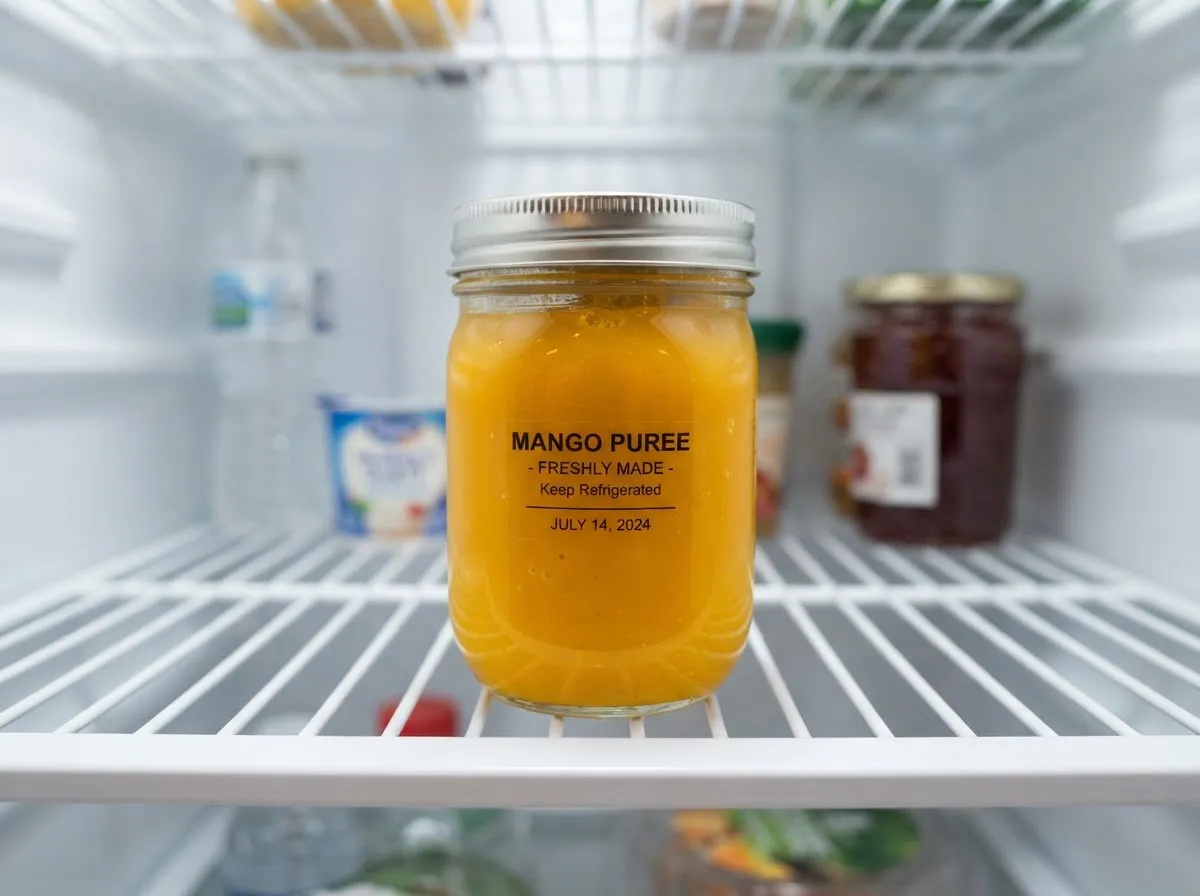

Understanding how long does mango puree last requires carefully reviewing the production process, packaging, and storage temperature. In industrial settings, teams control shelf life through proper storage, hygiene, and an uninterrupted cold chain.
Whenever beverages, sauces, ice cream, or other products contain mango, stability matters from the moment ingredients arrive. Moreover, puree may look acceptable while losing aroma, color, or safety because of improper handling.
Therefore, this guide explains how companies should evaluate shelf life without relying on one universal timeframe. Additionally, it helps purchasing, quality, and development teams communicate more effectively with qualified industrial suppliers.
Shelf life and how long does mango puree last
Determining how long does mango puree last depends on whether manufacturers offer it fresh, refrigerated, frozen, pasteurized, or aseptically packaged. Companies should always confirm the product’s actual shelf life through its corresponding technical data sheet.
Simply put, fresh mango puree lasts less because no industrial process specifically stabilizes it for extended storage. Conversely, processed puree preserves its characteristics better when teams follow packaging, storage, and logistics requirements.
Understanding how long does mango puree last also connects directly to the product’s intended final application. For example, a beverage facility needs consistency across deliveries, not merely an appealing flavor profile.
Therefore, Dream Foods offers pasteurized mango puree for numerous food, beverage, bakery, and dessert industry applications. Its uniform texture suits beverages, baby foods, ice cream, yogurt, bakery products, and professional pastry production.
Differences between fresh puree and processed puree
Determining how long does mango puree last when fresh commonly concerns kitchens, development teams, and initial product trials. During preparation and handling, staff expose it more readily to air, utensils, and temperature fluctuations.
Processed puree, however, undergoes selection, pulping, refining, pasteurization, packaging, and other carefully controlled production stages. Additionally, producers may use safety controls, batch testing, and specialized containers that protect the final product.

What influences mango puree’s shelf life?
Understanding how long does mango puree last involves much more than evaluating the fruit itself—additionally, decisions after processing matter, particularly those involving storage conditions and routine product handling procedures.
In practice, the following storage and handling factors often make the greatest difference across industrial operations:
- Storage temperature. Refrigeration slows microbial growth, whereas freezing stops that growth, although it cannot eliminate every potential risk.
- Packaging type. Clean, sealed, compatible packaging protects aroma, color, and texture more effectively throughout storage and distribution.
- Air exposure. Every opening may introduce oxygen, moisture, or accidental contamination into the remaining product during handling.
- Product handling. Teams must keep spoons, pumps, hoses, containers, and working surfaces consistently clean throughout daily operations.
How should companies store mango puree correctly?
Proper storage means respecting the product’s condition, packaging, and specified temperature throughout every operational stage. Furthermore, teams should prevent abrupt temperature changes during transportation, receiving, storage, and routine production use.
Before opening any format, teams should carefully review the label, technical data sheet, and supplier instructions. Then, adjust internal handling practices according to the facility’s actual production pace and operational requirements.
Refrigerated storage
The answer regarding how long does mango puree last under refrigeration changes when products remain sealed, opened, or freshly prepared. Therefore, companies should evaluate each scenario separately before assigning an appropriate internal usage period.
The FDA recommends keeping refrigerators at 40°F, equivalent to 4°C or below, to slow bacterial growth (FDA, n.d.). Additionally, teams should refrigerate perishables within two hours, or within one hour when temperatures exceed 90°F, equivalent to 32°C.
Frozen storage
Freezing helps preserve product quality longer when teams handle the puree correctly throughout the process. However, freezing cannot correct poor handling practices that occurred before the product entered frozen storage.
You can freeze peeled, cut mango for six months inside an airtight container (National Mango Board, n.d.). Nevertheless, industrial puree requires its corresponding technical data sheet rather than a generalized storage rule.
Why the cold chain matters
An uninterrupted cold chain reduces fluctuations affecting color, flavor, texture, and product safety during storage. Moreover, this control helps every batch reach production facilities under more stable and predictable conditions.
When teams thaw and refreeze a product, its overall quality may deteriorate significantly during subsequent storage. Therefore, companies should carefully control receiving, storage, picking, internal transfers, and final product dispatch procedures.
How can you tell when mango puree is no longer suitable?
Understanding how long does mango puree last also requires recognizing visible and sensory warning signs. Even so, appearance should never replace expiration dates, lot information, or the technical data sheet.
Before using the product, teams should carefully review the following potential signs of product deterioration:
- Color changes. A dull, unusually dark, or uneven shade may indicate deterioration or improper storage conditions.
- Aroma changes. Sour, fermented, or otherwise unusual odors require teams to stop using the product immediately.
- Texture changes. Excessive separation, lumps, or unusual viscosity require further investigation before production continues safely.
- Other deterioration signs. Swollen containers, leaks, mold, or vacuum loss provide meaningful warnings requiring immediate attention.
Can companies freeze mango puree to extend its shelf life?
In many cases, the answer to whether you can freeze mango puree is affirmative when the product, packaging, and process support safe freezing. Even so, manufacturers should guide the final decision through their specific product handling and storage recommendations.
As noted earlier, freezing works best with airtight packaging, uniform cooling, and stable temperatures throughout storage. Additionally, teams should never freeze portions that contamination has already compromised during routine production operations.
Mango puree shelf life according to the preservation method
Similarly, how long does mango puree last changes according to previous treatment and disciplined storage practices. Therefore, companies should interpret the following table only as a broad operational and planning guide.
In facilities with multiple shifts, this comparison helps teams organize purchasing and storage decisions more consistently. Additionally, it helps purchasing and quality teams request the same information from every potential supplier. For greater clarity, review the most important operational differences presented within the following comparative table:
| Preservation method | General scenario | What the company should review |
|---|---|---|
| Refrigeration | Useful for opened or prepared product during relatively short periods. |
Temperature, closure, hygiene, and opening date. |
| Freezing | May preserve quality for several months when temperatures remain stable. |
Packaging, ice crystals, thawing procedures, and inventory rotation. |
| Industrial storage | Depends on processing, packaging, and the technical data sheet. |
Lot number, certificate, declared shelf life, and traceability. |
In B2B operations, how long does mango puree last should never become one fixed, memorized figure. Instead, companies should purchase products that include clearly defined, verifiable, and properly documented technical parameters.
Best mango puree storage practices for companies
Mango puree performs more consistently when operations follow simple, reliable handling, storage, and monitoring rules. Additionally, these standardized rules reduce avoidable losses throughout production processes, storage operations, and inventory management.
In particular, the following practical measures support more consistent, reliable, measurable, and sustainable operational results:
- Temperature control. Use thermometers, logs, and alarms to identify potentially harmful fluctuations promptly during storage.
- Inventory rotation. Apply first-expired, first-out practices consistently and prevent older lots from remaining forgotten in storage.
- Hygiene and food safety. Clean utensils, connections, tables, pumps, and containers thoroughly before every production use.
- Supply chain management. Coordinate receiving, transportation, storage, documentation, and delivery requirements directly with the selected supplier.
For operations using several recipes, teams should also establish practical and standardized internal portion sizes. Consequently, staff avoid opening large containers repeatedly and reduce unnecessary product exposure during everyday production.
Why choose a supplier that guarantees quality and stability?
Understanding how long does mango puree last matters even more when companies produce at scale. A reliable supplier helps companies reduce batch variations, reprocessing, product losses, and unresolved quality concerns.
Furthermore, dependable technical documentation supports informed decisions involving formulation, costs, inventory management, and supply planning. Within the mango puree market, stability affects inventory while also influencing flavor, consistency, and production yield.
Dream Foods mango puree supports industrial applications and production processes that require dependable, consistent raw materials. Moreover, we maintain microbiological controls, relevant industry certifications, and compliance with established food safety standards.
If you need simple mango puree for beverages, ice cream, yogurt, bakery, or industrial pastry products, contact us. We will review applications, storage conditions, and technical requirements without making vague or unsupported promises.
The best approach for purchasing and quality teams
Companies should determine how long does mango puree last using technical documentation, temperature, packaging, and internal handling. Together, those operational factors prevent companies from making purchasing decisions based exclusively on the lowest available price.
Before approving any supplier, ask about processing, declared shelf life, traceability, certifications, and transportation conditions. Additionally, companies should align quality, development, and purchasing teams to prevent conflicting interpretations during supplier evaluation.
Understanding how long does mango puree last also depends on disciplined handling after purchase. When teams open containers carelessly, disrupt temperatures, or mix lots, declared shelf life loses practical value.
Therefore, companies should document responsibilities from initial receiving through the product’s final use in production. Clear operating instructions prevent reprocessing, returns, unnecessary losses, and improvised decisions during routine daily operations.
How long does mango puree last should never remain an unresolved issue during final purchasing decisions. Therefore, request complete technical information and verify whether the product fits your specific industrial operation.
Ultimately, mango puree becomes more than a tropical ingredient for food and beverage production processes. Instead, it becomes a technical decision that protects flavor, consistency, safety, profitability, and operational continuity.
Referencias
- FoodSafety.gov. (2023). 4 steps to food safety.
- National Mango Board. (n.d.). Maduración y almacenamiento de mangos.
- U.S. Food and Drug Administration. (n.d.). Are you storing food safely?