
Do you need to secure flavor, performance, and supply continuity before purchasing frozen guava puree? Ultimately, the right decision begins with verifiable specifications.
For industrial purchasing, comparing prices or requesting a sample does not provide enough information. Additionally, buyers should review origin, processing, food safety, formats, supply, and technical support. Therefore, this guide will help you evaluate suppliers using practical criteria for purchasing, quality, logistics, and production.
What is frozen guava puree?
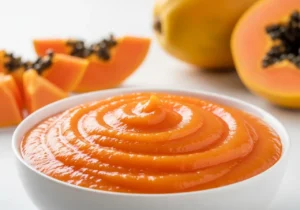
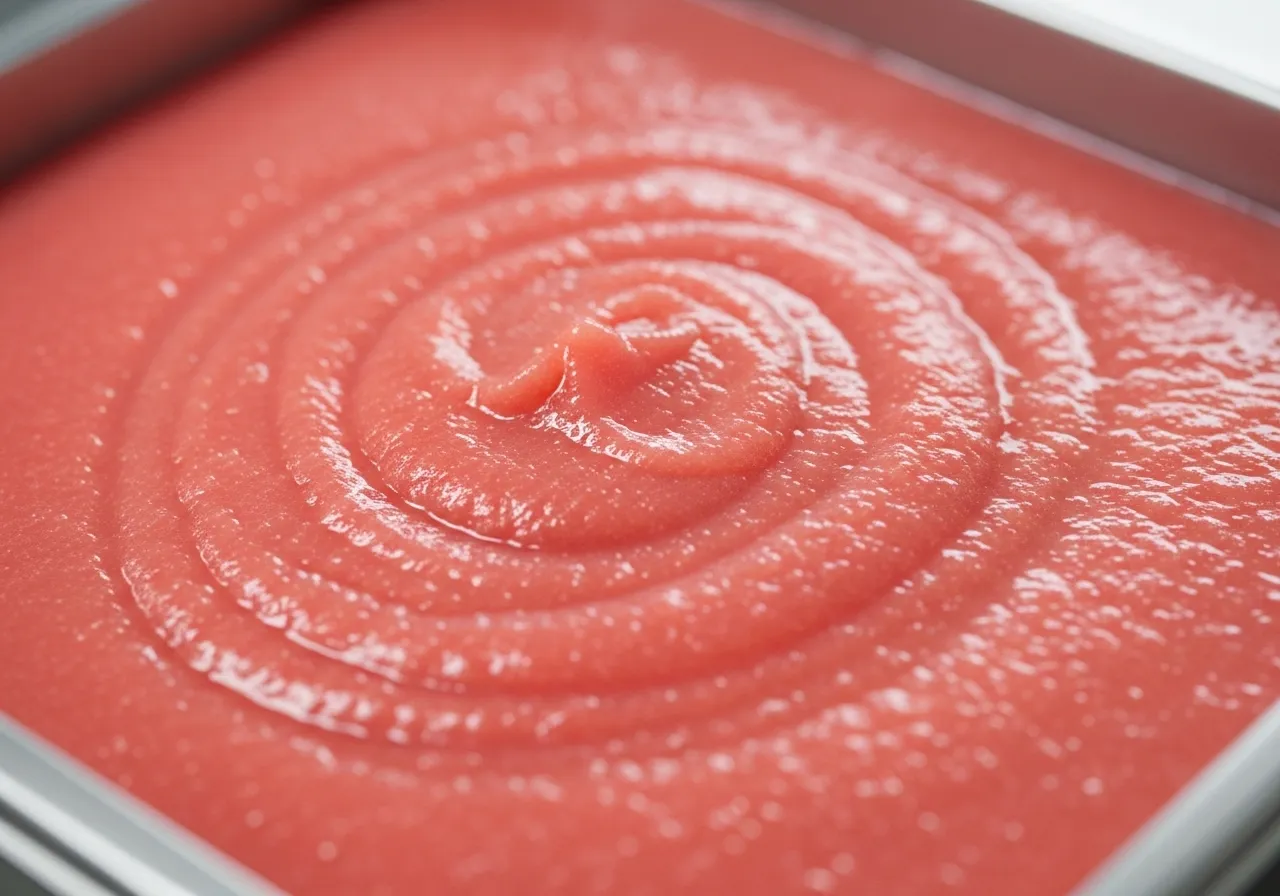
Frozen guava puree comes from breaking down and sieving the edible portion of ripe, healthy, and clean fruit. Afterward, processors package and preserve the product at low temperatures to maintain stability during storage and transportation.
Its industrial value lies in providing a consistent base for formulations requiring reliable flavor, color, and texture. However, teams must review every batch through technical sheets, analysis certificates, traceability, and clearly defined storage conditions.
At Dream Foods, our single-strength puree remains natural, unconcentrated, undiluted, and free from preservatives. Furthermore, we use Colombian fruit, consistent texture, and defined physicochemical parameters for industrial applications.
Guava fruit puree, Guava fruit pulp, and Guava fruit juice: differences
Guava fruit puree retains a significant proportion of solids and the characteristic texture of properly sieved fruit. Meanwhile, Guava fruit pulp often functions as an equivalent term throughout different Latin American markets, although commercial definitions vary by supplier, process, and regulation.
By contrast, Guava fruit juice has a more fluid phase and may contain less insoluble material. Therefore, purchasing and development departments should request complete technical definitions instead of relying solely on the ingredient’s commercial name.
Frozen guava puree vs. aseptic Guava fruit puree
Both formats can work across industrial lines, although they change logistics, storage requirements, and daily operations. Accordingly, the choice depends on monthly consumption, available space, transportation distance, turnover, and internal handling capacity.
Additionally, the comparison should consider energy, inventory, preparation, packaging, and product behavior after opening. Thus, the selected format should support the complete process.

Main differences in storage, shelf life, and logistics
Frozen guava puree requires maintaining the cold chain and planning thawing, handling, and consumption carefully. Conversely, manufacturers thermally process aseptic puree and fill it under controlled conditions to maintain stability before opening without freezing.
Our puree offers a 24-month shelf life at temperatures equal to or below -18°C. Additionally, bag-in-box presentations provide an 18-month shelf life when stored below 24°C.
These differences affect transportation, storage, inventory, and preparation costs throughout the operation. Therefore, companies should evaluate available infrastructure before selecting any format.
When should you choose frozen guava puree?
Choose frozen guava puree when your formulation prioritizes a profile close to processed fruit, and your facility controls frozen storage. Additionally, this format works when turnover allows teams to thaw only the required volume.
Before approving it, calculate energy consumption, available space, and necessary thawing times. Similarly, consider potential waste and operational contingencies. Furthermore, confirm proper handling after opening and determine how long the product can remain available for production.
When should you choose aseptic Guava fruit puree?
Aseptic formats usually suit companies needing simpler storage, additional freezer capacity, or ingredients for scheduled consumption. Moreover, they can support operations involving long transportation routes and logistics centers without sufficient freezing infrastructure.
Even so, review the maximum temperature, packaging integrity, and handling after opening. Indeed, aseptic conditions do not eliminate controlled internal procedures, inventory rotation, or complete batch traceability.
How should you choose a wholesale puree supplier?
Supplier selection should reduce variability and protect production continuity. Therefore, evaluate these criteria before issuing an order:
- First, verify the supplier’s experience with industrial ingredients. Confirm whether the company understands specifications, scaling, documentation, and manufacturing requirements.
- Next, request a technical sheet, analysis certificate, and detailed specifications. Review ingredients, microbiological parameters, tolerances, and acceptance criteria.
- Likewise, review food safety certifications and export compliance. Additionally, validate good practices, preventive controls, and documentation capabilities.
- Furthermore, evaluate supply capacity, available formats, and traceability. Confirm volumes, lead times, batches, origin, packaging, and deviation responses.
- Finally, compare price, quality, shelf life, and technical support. Moreover, include yield, logistics, storage, and total usage costs.
Companies should also review the supplier’s commercial and technical responsiveness. Ultimately, an industrial supplier must handle samples, documentation, and destination-market conditions effectively.
Technical specifications to review before purchasing guava fruit puree
A useful technical sheet converts the ingredient into parameters your facility can validate. Before approving frozen guava puree, confirm the following points:
- First, review Brix degrees in Guava fruit puree. These values help anticipate soluble solids, sweetness, and necessary formulation adjustments.
- Next, examine pH, acidity, and sensory profile. These factors influence flavor, stability, thermal processing, and compatibility with other ingredients.
- Additionally, assess color, texture, aroma, and flavor. Define acceptable ranges and evaluation methods for every production batch.
- Likewise, review ingredients, preservatives, and clean-label declarations. Confirm additives, allergens, genetically modified organisms, and intended claims.
- Moreover, examine shelf life and storage conditions. Validate temperature, transportation, thawing, and handling procedures after opening.
- Finally, compare industrial formats. Review aseptic bags, bag-in-box packaging, drums, and frozen packaging according to consumption and operations.
Additionally, review microbiological specifications, testing methods, and foreign-material limits. Therefore, documentation should allow quality teams to compare results against internal and regulatory requirements.
Applications of frozen guava puree across the industry
Guava fruit provides a tropical profile that adapts to sweet, fermented, and savory categories. However, every application requires validation of dosage, stability, thermal treatment, and sensory compatibility. Specifically, its applications include:
- Beverages, juices, nectars, and smoothies. For example, it can provide texture, color, solids, and a clearly defined tropical identity.
- Yogurts, dairy products, and plant-based products. Likewise, it works in flavored bases, fruit preparations, and incorporation blends.
- Ice creams, sorbets, and frozen desserts. Moreover, it helps develop flavor, color, and consistency in chilled formulations.
- Bakery products, pastries, fillings, and toppings. Additionally, manufacturers can incorporate it into creams, glazes, doughs, and fillings.
- Sauces, glazes, and savory preparations. Similarly, it allows formulators to combine sweetness, acidity, spices, and spicy components.
· Craft beers, fermented beverages, and cocktails.
Always test the ingredient with the complete recipe under actual production conditions. Thus, you can confirm yield, phase separation, color, aroma, and stability throughout the intended shelf life.
Advantages of purchasing Colombian guava fruit puree
Colombia offers several production regions and a supply chain focused on industrial tropical fruit processing. Therefore, purchasing this puree from Dream Foods provides these benefits:
- First, year-round tropical fruit availability. Proper planning can coordinate harvesting, processing, inventory management, and scheduled shipments.
- Additionally, the sensory profile of Colombian Guava fruit can provide pink color, distinctive aroma, and characteristic ripe-fruit flavor.
- Moreover, traceability from origin connects each batch with raw materials, production, packaging, storage, and supporting documentation.
- Finally, export options for the United States and other markets require suppliers with logistics and regulatory experience.
Where can you purchase this type of puree wholesale?
When purchasing frozen guava puree, prioritize manufacturers that provide specifications, certificates, samples, and technical support. Additionally, request information about minimum volumes, lead times, formats, monthly capacity, and export conditions.
At Dream Foods, we work with tropical ingredients and offer natural, unconcentrated, preservative-free frozen guava puree. Furthermore, each puree’s technical information includes formats, origin, and useful parameters for evaluating ingredients within B2B processes.
Discover Dream Foods’ single-strength guava fruit puree and request technical information about formats, supply, and export conditions. Thus, you can compare frozen guava puree using clear criteria and request a quotation tailored to your application.
References
- Codex Alimentarius Commission. (2025). General standard for fruit juices and nectars (CXS 247-2005).
- U.S. Food and Drug Administration. (n.d.). Guidance for industry: Juice Hazard Analysis Critical Control Point hazards and controls guidance.
- U.S. Food and Drug Administration. (n.d.). Juice HACCP and the FDA Food Safety Modernization Act.