Indeed, frozen passion fruit stands as a highly reliable ingredient for bringing tropical flavor into production without sacrificing freshness. Furthermore, this format preserves the intense aroma of ripe fruit and significantly reduces waste compared to whole fruit. At Dream Foods, we process single strength passion fruit in Colombia through pulping, refining, pasteurizing, and aseptic filling.
Consequently, this guide resolves the frequent doubts of buyers and product development researchers working within the food industry. You will see what distinguishes frozen passion fruit from both simple puree and the convenient aseptic format available. Readers will find its real industrial uses, the technical figures that matter, and a pre-purchase checklist right here. Ultimately, you will understand when migrating to an ingredient featuring a technical data sheet and traceability makes sense.
What is frozen passion fruit and how does it differ from puree?
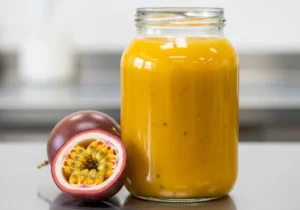
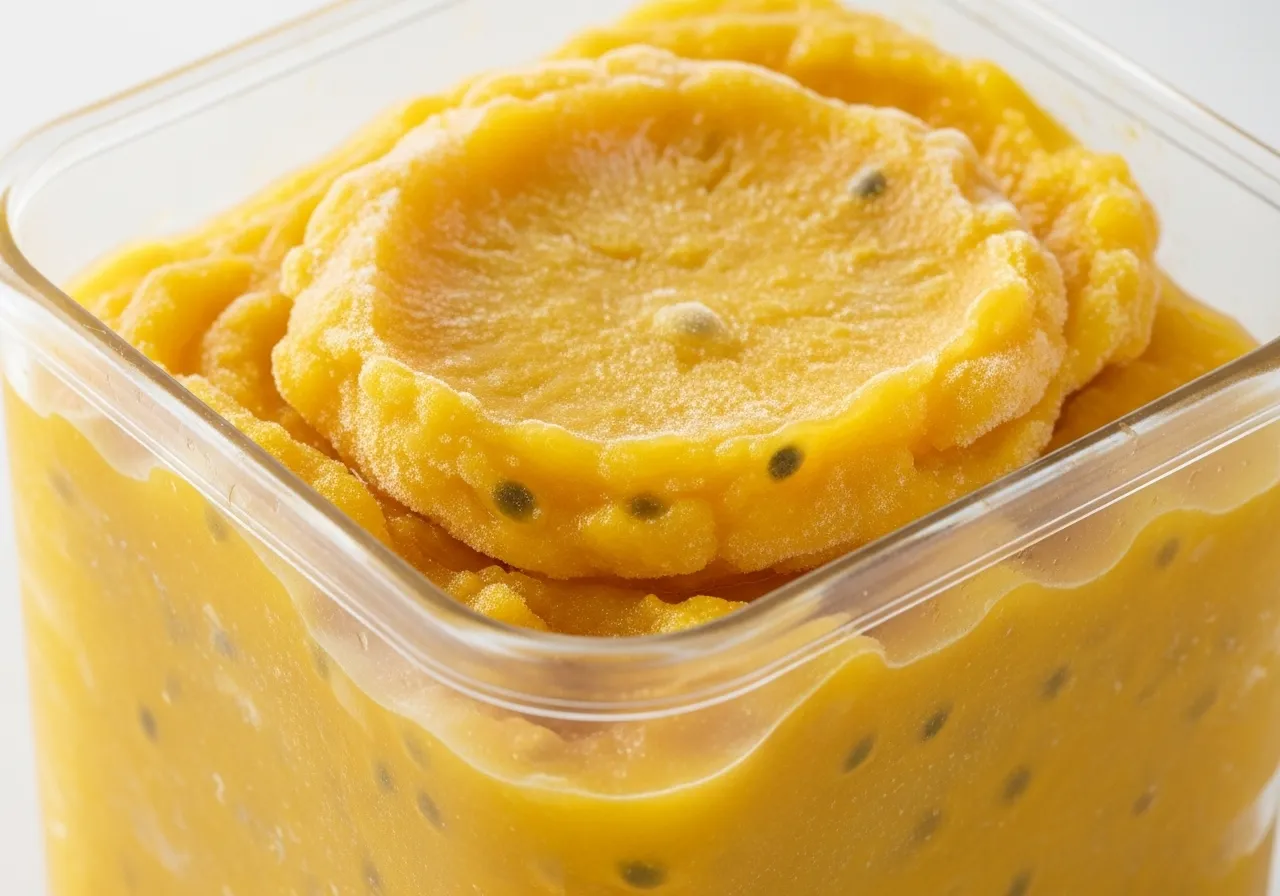
Basically, frozen passion fruit represents the pulp or fruit undergoing freezing temperatures to effectively halt its natural deterioration. The low temperature stops enzymatic and microbial activity, ensuring the sensory profile remains completely stable over extended periods.
Unlike a ready-to-use puree, this specific format usually retains significantly more texture for your diverse industrial manufacturing needs. Moreover, its natural acidity remains high: our Dream Foods pulp reports a 2.80 to 3.30 pH and 2.50 to 4.00 % citric acid acidity. That intensity explains why a moderate dose easily perfumes large volumes without requiring excessive product in the mix.
On the other hand, before reviewing formats, we should clarify three commonly confused terms within the manufacturing industry.
Frozen fruit, frozen pulp, and simple puree
Generally, frozen fruit encompasses the whole or chopped fruit, with or without peel, taken directly to freezing temperatures. Meanwhile, frozen pulp already underwent pulping and sieving, which successfully eliminates the peel and any unwanted foreign materials.
Similarly, simple puree constitutes a refined and homogeneous product, neither diluted nor concentrated, designed to dose equally per batch. Each distinct presentation specifically responds to a different processing need within your unique food and beverage manufacturing operations.
Whole fruit serves artisanal uses well; whereas pulp suits medium-sized commercial kitchens and specialized preparation workshops perfectly today. Simple puree fits better where repeatability rules the production line, as you will clearly see later in this guide.
With or without seeds: what changes in production
Unquestionably, the presence of seeds defines a large part of the final result in your food and beverage formulations. Specifically, a product containing seeds provides visible texture and reinforces the perception of natural fruit in nectars or drinkable yogurts.
Likewise, a seedless option facilitates pumping, prevents nozzle obstructions, and yields better results in filtered beverages or smooth desserts. Our technical data sheet indicates minimal passion fruit particles and allows sieving from 0.5 to 1.5 mm per client. Thus, the buyer carefully chooses the exact grain size that their specific production line readily tolerates without issue. That crucial decision also directly conditions the type of dosing equipment you will need to implement during production.
What is frozen passion fruit used for in the industry
Notably, frozen passion fruit functions as a foundational base ingredient across numerous competitive food and beverage product categories. Its marked acidity balances sweet formulas and provides the tart counterpoint that the average consumer strongly associates with tropical flavors.
In the plant, its concentrated profile allows working with small doses while effectively keeping all your production costs under control. It also resists gentle thermal processes exceptionally well, retaining its unique character even after completing the rigorous mixing stage. This impressive versatility makes it highly attractive for development areas actively seeking significant sensory differentiation in their final consumer offerings. The most common industrial applications currently concentrate their heavy usage across the following distinct manufacturing and production fronts:
- Beverages: nectars, flavored waters, smoothies, and solid bases to prepare passion fruit juice at a massive commercial scale.
- Mixology: reliable bases for modern mocktails, classic tiki drinks, and flavorful syrups featuring a perfectly constant natural acidity.
- Ice cream and frozen desserts: refreshing sorbets, vibrant popsicles, and rich creams boasting an incredibly intense tropical flavor.
- Dairy: drinkable yogurts, innovative plant-based products, and complex fermented beverages requiring a bright and distinctive tropical fruit profile.
- Pastry: delicious fillings, smooth curds, light mousses, and perfectly balanced sweet and sour glazes for high-end bakery applications.
- Foodservice: versatile sauces, premium toppings, and ready-to-use bases tailored specifically for large and demanding modern food supply chains.
Across all these distinct production lines, maintaining a completely consistent flavor that never varies between batches remains the absolute priority.
Differences compared to aseptic passion fruit puree
Consequently, the aseptic format introduces a highly important logistical change when you compare it directly against standard freezing methods. While frozen items demand a continuous cold chain, the aseptic alternative remains perfectly stable at standard room temperature conditions.
Our passion fruit pulp retains up to 24 months shelf life freezing at –18 °C and 18 months in Bag-in-Box packaging under 24 °C. That crucial difference helps your industry optimize storage costs, maximize warehouse space, and improve overall inventory management practices daily. Furthermore, the aseptic fruit puree always arrives completely ready to integrate into your mix without requiring any previous thawing.
Let us examine the direct comparison of two key aspects before deciding which format suits your specific needs best.
Conservation, cold chain, and shelf life
Fundamentally, conservation marks the definitive practical boundary separating both formats during large scale industrial food and beverage manufacturing operations:
- The frozen product strictly depends on –18 °C equipment during transport and storage; any cold chain breach compromises its quality.
- The aseptic format, thanks to pasteurization and sterile filling, easily tolerates ambient conditions without ever losing its essential food safety.
Additionally, keep in mind our passion fruit puree offers 8 months shelf life in high-barrier bags at room temperature and 12 months refrigerated. For operations managing severely limited warehouse spaces, that valuable autonomy significantly reduces everyday logistical risks across the entire supply chain. Therefore, the final choice depends heavily on both your currently available equipment and your facility’s specific daily consumption rate.
Dosing and consistency between batches
Without a doubt, repeatability represents the single most valued characteristic running across any modern industrial food or beverage production line. The frozen passion fruit might vary slightly regarding texture and seed presence depending heavily on the specific fruit batch received.
For instance, a refined product featuring clearly defined °Brix, pH, and acidity parameters greatly facilitates the entire complex formulation process. Our premium pulp reliably operates between 12.0 and 14.0 °Brix, staying safely within ranges controlled by its critical process points. With those precise data points, the development area confidently adjusts sweetness and acidity levels with absolute precision every single time. Consequently, many manufacturing plants ultimately end up preferring our format equipped with a highly detailed and rigorously tested technical sheet.
What to check before buying frozen passion fruit
Buying frozen passion fruit for production demands looking much further beyond just analyzing the basic market price per kilogram offered. For example, a reliable supplier strongly backs their product using easily verifiable documentation and consistently measurable technical parameters upon request. The ingredient declaration must remain completely clean, containing absolutely no added sugar or any unnecessary artificial preservatives within the mix. Furthermore, batch traceability and internationally recognized food safety certifications matter immensely when selecting your ideal industrial fruit pulp supply partner.
Our Dream Foods technical sheet highlights a preservative-free, non-GMO product proudly holding esteemed Kosher and FSSC 22000 food safety certifications. Before finalizing any purchase, buyers should always carefully review this minimum essential checklist to ensure total product quality and safety:
- Complete ingredient declaration and total absence of any added sugars or potentially harmful artificial preservatives in the final product composition.
- Verified °Brix, pH, and overall acidity parameters strictly contained within clearly defined and highly controlled industrial manufacturing acceptance ranges.
- Exact presence or complete absence of natural seeds, selected carefully according to your specific intended commercial food or beverage application.
- Optimal packaging format ensuring seamless physical compatibility with your facility’s current automated or manual industrial ingredient dosing production line setups.
- Currently valid technical data sheet accompanied by a fully comprehensive and official certificate of analysis covering every single delivered batch.
- Transparent supply chain traceability, clearly printed batch numbers, and a highly accurate declared shelf life spanning the entire product lifecycle.
- Detailed allergen information, clearly listing potential trace elements like sulfites remaining strictly below the accepted 10 ppm safety threshold limits.
Through this verification, the purchase stops being a risky gamble and quickly becomes a highly informed and strategic business decision.
When to take the step towards industrial passion fruit puree
Inevitably, a specific point arrives where standard freezing stops being sufficient for a commercial operation experiencing rapid and sustained growth. When a plant needs the exact same flavor in every production, a refined ingredient perfectly offers that much-needed overall stability. The same situation occurs whenever the end client firmly demands complex technical documentation, strict safety controls, or rigorous export requirements.
Although frozen passion fruit remains useful for testing and medium volumes, the industrial format inherently responds much better to scale. Dream Foods proudly manufactures high-quality Colombian tropical fruit pulps and simple juices designed perfectly to address that specific pivotal moment. Our strong proposal stems from ripe fruit, highly controlled processes, and precise technical sheets accompanying every single critical purchasing decision.
If your company is refining a tropical formula, comparing the frozen format of our passion fruit puree with solutions ready to scale your production is worthwhile.
Referencias
- Mordor Intelligence. (2026). Ice cream market size and share – growth trends and forecast (2026 – 2031).
- Fresh Fruit Portal. (2024, May 23). Colombian passion fruits ready to enter the US market.