If you want to know what is pineapple puree, is one of the most versatile ingredients for the food and beverage industry. At Dream Foods, we produce it with ripe, hand-selected tropical pineapple from Colombia. Below, we explain what is and how it’s made. You will also see why it has become a key input for manufacturers worldwide.
What is pineapple puree?
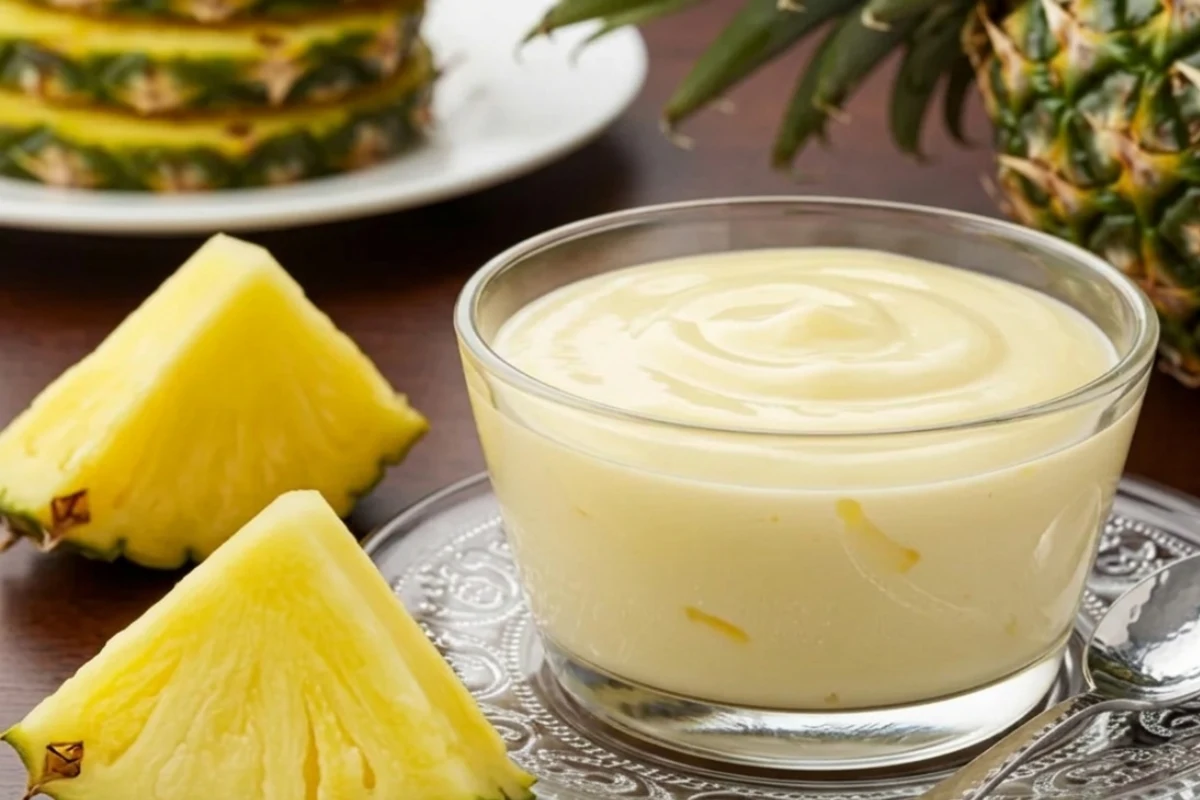
Pineapple puree is a natural product: undiluted, not concentrated, not fermented, and preservative-free. It is obtained by disintegrating and sieving the edible fraction of ripe, healthy, clean pineapple.
In practice, this means three key traits:
• 100% fruit: it has no added water, sugar, or additives.
• Real flavor: it keeps the aroma and color of ripe pineapple.
• Ready to use: it works as a direct raw material on the line.
What “single strength” pineapple puree means
The term “single strength” describes a puree that is not concentrated. In other words, it keeps the fruit’s natural Brix level. Therefore, no water has been evaporated or added. This preserves pineapple’s original profile. Explore our pineapple puree single strength.
How is pineapple puree made?
Making this puree follows a controlled process from start to finish. Each stage protects the safety and flavor of the fruit. The industrial flow includes the following steps:
1. Receiving and sorting: ripe pineapples arrive and damaged ones are removed.
2. Washing and disinfection: the fruit is cleaned to remove residue.
3. Pulping and refining: the pulp is separated and sieved to a fine texture.
4. Pasteurization: a heat treatment ensures microbiological stability.
5. Aseptic filling: the product is packed sterile for a longer shelf life.
Pasteurization and aseptic packaging
Pasteurization and aseptic packaging are two decisive steps. Thanks to them, the product stays stable without any preservatives. Shelf life depends on the packaging format:
• High-barrier bag: up to 8 months at room temperature.
• Bag-in-Box: up to 18 months at room temperature below 24 °C.
• Frozen: up to 24 months at −18 °C or lower.
Pineapple puree vs. juice, pulp and concentrated pineapple
Many buyers confuse these formats, although they differ clearly. Puree adds body and texture; juice, by contrast, is more liquid. Pulp resembles puree, but with more visible particles. Concentrated pineapple, meanwhile, is made by evaporating water and raising the Brix. For that reason, it helps to tell each option apart before formulating:
• Pineapple puree: thick texture and full flavor; ideal for adding body.
• NFC juice: liquid and not concentrated; designed for clear beverages.
• Pineapple pulp: similar to puree, with more noticeable fiber.
• Concentrated pineapple: denser and sweeter; useful to reduce volume.
What is pineapple puree and what is it used for?
This puree works as a raw material across many production lines. Its tropical flavor and texture make it highly adaptable. Among its most common applications, the following stand out:
• Beverages: nectars, flavored waters, smoothies, and cocktails.
• Dairy and ice cream: yogurts, popsicles, and frozen desserts.
• Bakery: fillings, glazes, and baking mixes.
• Sauces and dressings: marinades and sweet-and-sour preparations.
• Jams and compotes: as a natural fruit base.
In fact, the global fruit puree market is projected to reach USD 10 billion by 2035 (FreshFruitPortal, 2025).
What is pineapple puree: key technical characteristics
For purchasing and R&D teams, the technical figures are decisive. This industrial-grade puree keeps stable, measurable parameters. These are its main characteristics:
• Brix: between 9.0 and 14.0 °Brix, depending on the harvest.
• pH: between 3.30 and 3.90, which supports its preservation.
• Acidity: from 0.50 to 0.80% as citric acid.
• No added sugar: the sugars come only from the fruit.
• Color and texture: deep yellow, fluid, and homogeneous.
• Shelf life: up to 18 months in aseptic Bag-in-Box.
The food sector keeps innovating with fruit ingredients.
Is pineapple puree healthy?
For many manufacturers, the nutritional profile also weighs on the decision. The puree delivers the fruit’s flavor with a simple, clean profile. Here are some reference figures per serving:
• Moderate calories: around 40 kcal per 80 mL serving.
• No fat or cholesterol: naturally free of both.
• Fiber: it adds part of the fruit’s natural fiber.
• Vitamin C: pineapple is naturally rich in this nutrient.
How to choose a pineapple puree supplier
Choosing the right puree goes beyond price. Quality, traceability, and technical support make the difference. Before closing a deal, review these criteria:
• Certifications: look for seals such as KOSHER and FSSC 22000.
• Available formats: aseptic, frozen, and various pack weights.
• Traceability and origin: clear information on the fruit and its source.
• Export experience: capacity to meet large volumes.
At Dream Foods, we make pineapple puree with tropical Colombian fruit. We meet standards designed for the U.S. and EU markets. If your company needs a reliable supplier, you can request our technical sheet or a quote.
References
- FreshFruitPortal. (2025). Papaya is the queen of exotic fruits in the U.K.
- FreshFruitPortal. (2025). Global fruit puree market to reach $10B by 2035.
- FreshFruitPortal. (2025). Spain strengthens its position as a key tropical fruit market and bets on new varieties.
- FreshFruitPortal. (2024). Fresh Del Monte brings red-shelled Rubyglow™ pineapple to U.S.
- Institute of Food Technologists. (2023). Food Technology Magazine.